
Starring: Jessica Lange, Armin Mueller-Stahl and Frederic Forrest
Directed by: Costa-Gavras
Written by: Joe Eszterhas
Rated: PG-13
Running Time: 2hrs 4min
WINNER – Berlin International Film Festival – Golden Berlin Bear
NOMINEE – Academy Awards – Best Actress in a Leading Role (Jessica Lange)
NOMINEE – Golden Globes – Best Performance by an Actress in a Motion Picture – Drama (Jessica Lange)
“After the movie was released, screenwriter Joe Eszterhas’ own father, Istvan Eszterhas, was accused of war crimes in Hungary for printing anti-Semitic editorials, and even organizing a book burning. When Istvan admitted the charges were accurate, Joe responded by publicly condemning his father, and disowning him as a parent, later writing that he never reconciled with Istvan, and refused to let him see his grandchildren right up to the point where Istvan died of natural causes.” IMDB
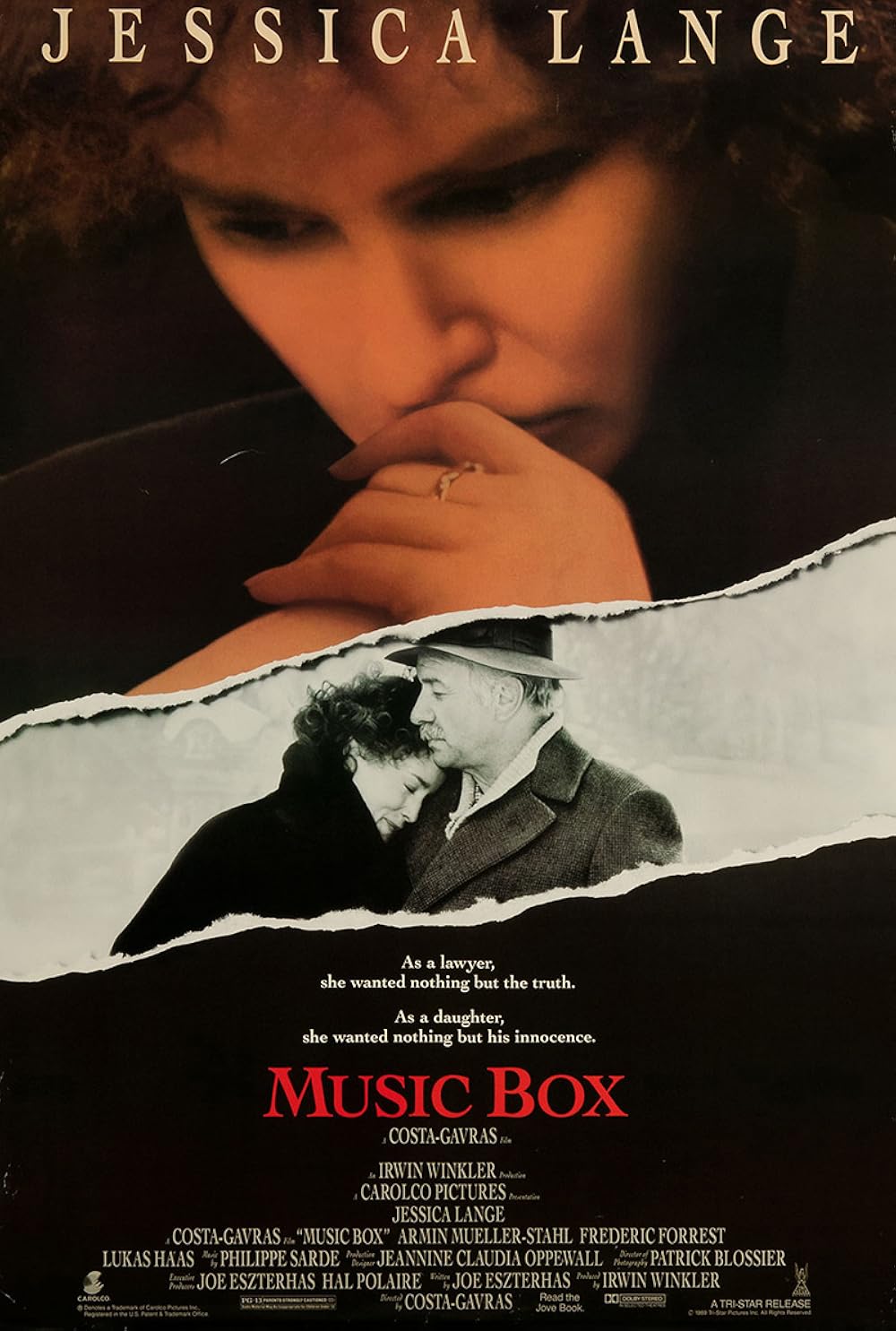
For a long time, screenwriter Joe Eszterhas became associated with a very specific genre of film. Starting with 1992’s BASIC INSTINCT and continuing with his screen adaptation of Ira Levin’s novel SLIVER, he became best known for writing erotic thrillers. Then, in 1995, he wrote one of the most infamous box-office bombs of all time, the incredibly cheesy story of a Las Vegas stripper named Nomi – Paul Verhoeven’s SHOWGIRLS. Suddenly, many moviegoers didn’t take him seriously anymore. What moviegoers seem to have forgotten is that before journeying down this path, Eszterhas wrote a number of films that established him as a very different kind of screenwriter and a very talented one at that. From the interesting courtroom drama directed by Richard Marquand and starring Glenn Close and Jeff Bridges, JAGGED EDGE, to my personal favorite Jean Claude Van Damme action/thriller, NOWHERE TO RUN (trust me, check this one out) to the racially charged BETRAYED directed by the same filmmaker who made the subject of this recommendation, Costa-Gavras, his scripts were very different and some even caused interesting discussions after a viewer experienced them. 1989’s MUSIC BOX is one of his best. A film that examines the theme reflected in its original title, THE SINS OF THE FATHER, focusing on the very important issue of how the actions that we as human beings make can impact those around us.
The story revolves around Ann Talbot, a lawyer who is asked to defend her father against accusations that are as serious as it gets: Nazi war crimes. People are claiming that he did awful things… things that Anne just can’t believe he would do. These are not the actions of the man who raised her. No way. Yet, as the story begins to reveal itself, Anne is forced to hear statements regarding her dad’s involvement in the murders of innocent Jews, some of whom were children, bringing her down an emotional path to discover the truth of her father’s past, while battling her feelings of doubt for a someone she loves unconditionally and refuses to see as anyone other than the man she knew before these accusations came to light.
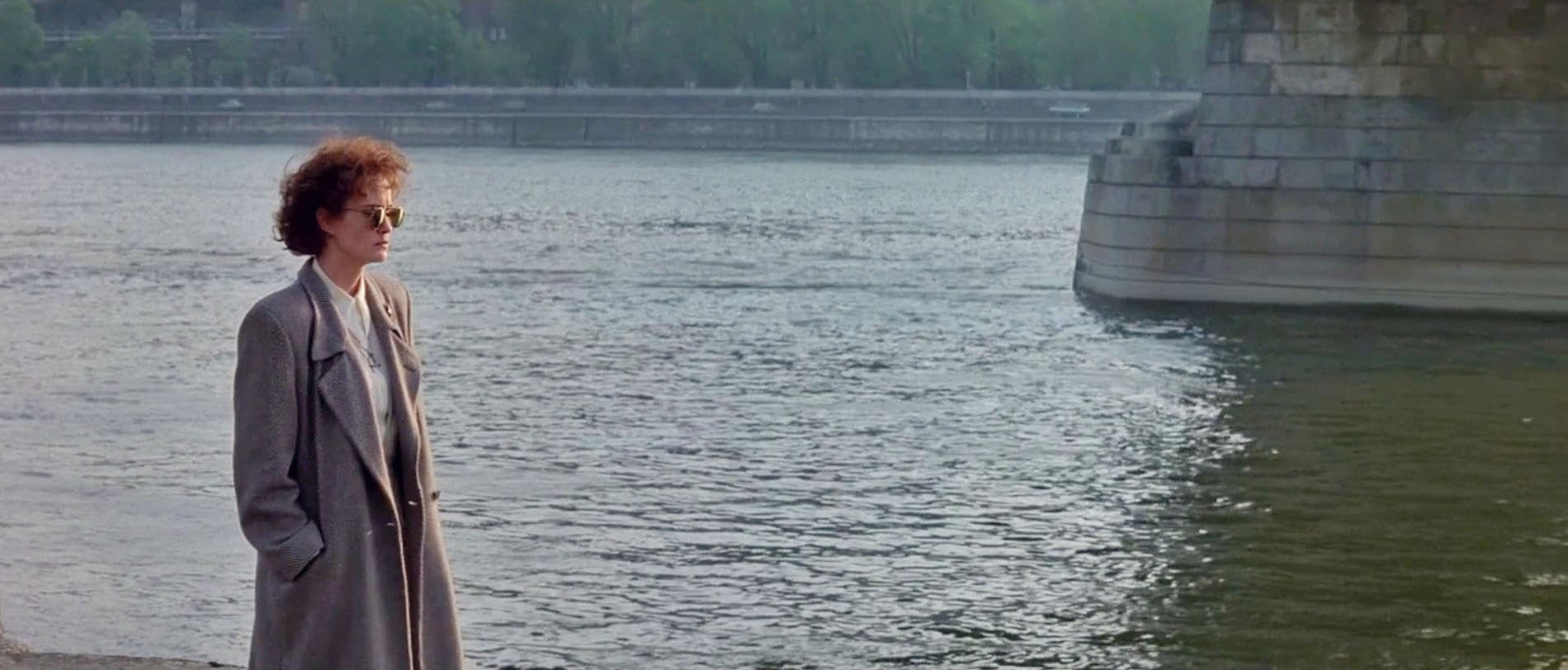
In my opinion, MUSIC BOX may be one of the most misunderstood films that I have ever recommended and to this day, I still don’t understand the critical response to this powerful story. It’s almost as if the critics saw a different movie than me. Maybe their expectations were not met when they got a film that had a very different tone than director Gavras’ other work – Z, MISSING, STATE OF SIEGE, etc…? Maybe it was because, on the surface, the story plays out more like a typical courtroom drama, where the strong political themes take a backseat to the lead character’s emotional journey. Maybe this wasn’t what they wanted out of what could have been an important movie addressing the actual atrocities of the Holocaust. Film critic Roger Ebert (whom I have nothing but respect for), complained, “It is not about guilt or innocence; it is a courtroom thriller, with all of the usual automatic devices like last-minute evidence and surprise witnesses… …What is most offensive about “Music Box” is that it makes no particular attempt to understand the personality of the old man, who may have been a Nazi.” The problem with this kind of thinking, though, is that this is asking for a different story, not the one that has been put in front of us and as viewers, it is not our job to judge a movie based on the one that we would have made, but instead judge the intentions of the film that is being presented. This isn’t a movie about the holocaust. Those tragic events serve only as a plot device used to explore a very different theme – the confusion and unconditional belief we place in the people we love. If the viewer is looking for a movie that confronts the full horror of what the Nazi regime inflicted on innocent people, they will find that that’s what Steven Spielberg’s horrifying SCHINDLERS LIST and Roman Polanski’s terrifying THE PIANIST are there to represent. MUSIC BOX has a very different thematic purpose entirely and doesn’t place the Jewish suffering front and center. It instead places its emphasis on Ann, a woman who must confront her belief in her father’s innocence, while the realization that he could very well be the monster witnesses claim he is becomes impossible to ignore, as the evidence against him suggests. If the viewer looks more deeply, they will find something far more substantial than just the generic courtroom melodrama that some critics suggest it is.
Eszterhas’ script is smart in the ideas that it presents and how it introduces them. As the pieces of the puzzle start to fall into place, the viewer is not shown flashbacks that depict the horrors that Lazlo is being accused of. Instead, we are presented with witness testimony against Lazlo, as we, the viewer, must sit there, like Anne, and judge whether we believe what they have to say. We know that they are telling the truth, but is it regarding the right man? The script allows the audience to get to know Lazlo through his daughter and grandson’s eyes as we witness the love they have for this man, as well as the belief they have in his innocence. Actually, everyone who is presented as part of Lazlo’s life can’t seem to believe any of it, and we as viewers can only hope that he is innocent.
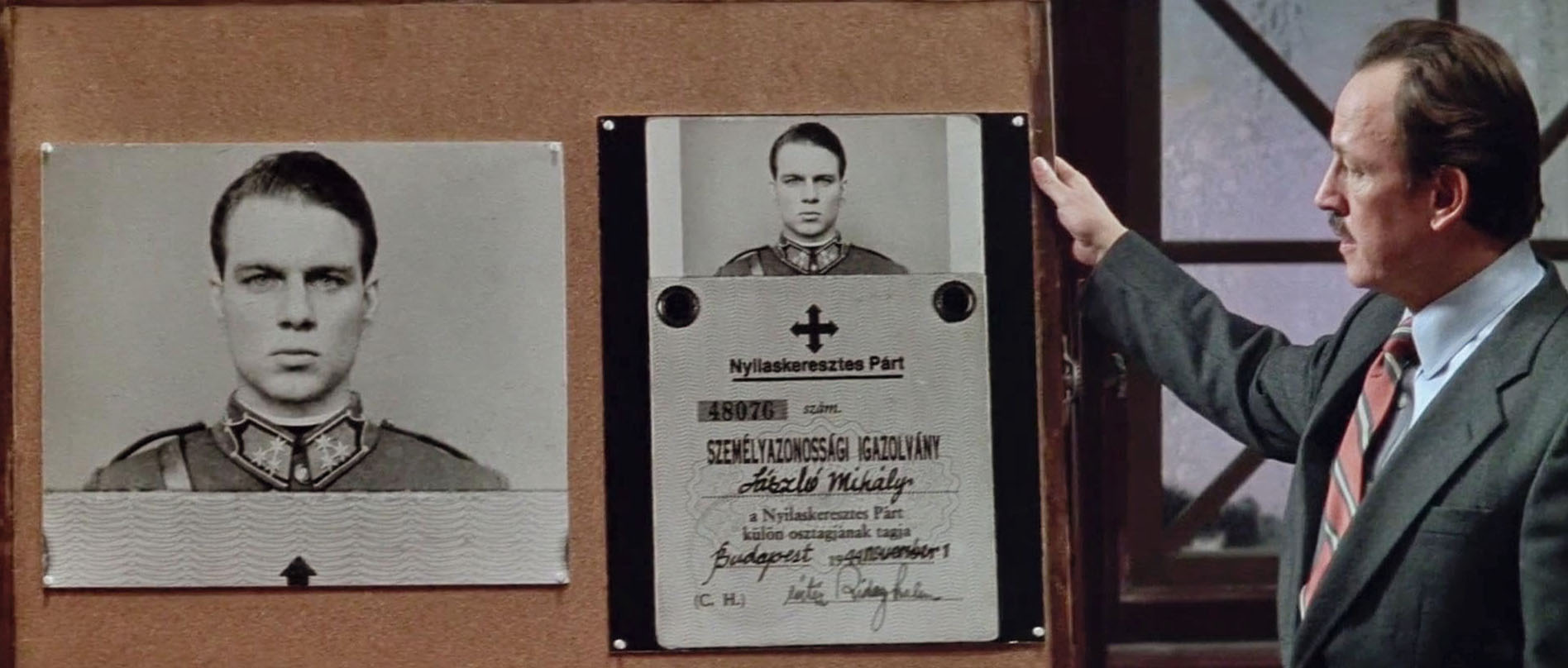
The heart of the film lies in the two lead performances given by Jessica Lange and Armin Mueller-Stahl. Lange’s Oscar-nominated performance is a complicated portrayal of a woman who begins the journey with a no-holds-barred, “I love my dad and believe he’s innocent” attitude that slowly starts to fade away as the witnesses tell their stories on the stand. What makes the performance so strong is that, as Anne begins to understand the significance of the charges against her father, her feelings shift from a definite belief to a more complicated need to believe and Lange presents this change with a subtle innocence that endears the audience to her. A guilty verdict will tear her apart and the viewer must root for this not to happen. Lange, at times, shows a confident strength in her character that becomes important in the film’s final moments when Anne must react to the actual conclusions regarding her father’s guilt or innocence.
Meanwhile, Mueller-Stahl creates a sense of desperation in the Lazlo character that could go either way, causing a question within the audience regarding his guilt. His mannerisms can be read as either cold or scared, making the film’s conclusions less predictable than the viewer might expect. Watching him interact with his children and grandson, he comes off as a loving family man who we can only hope is exonerated. But if the audience watches closer to his desperate need to be proven innocent, his attitude can fit either conclusion. Is he just a scared man who is desperate to prove his innocence, or is he a guilty monster who is desperate to get off? When all is revealed, his attitude doesn’t change and his final moments with his daughter are as powerful as they are subtle.
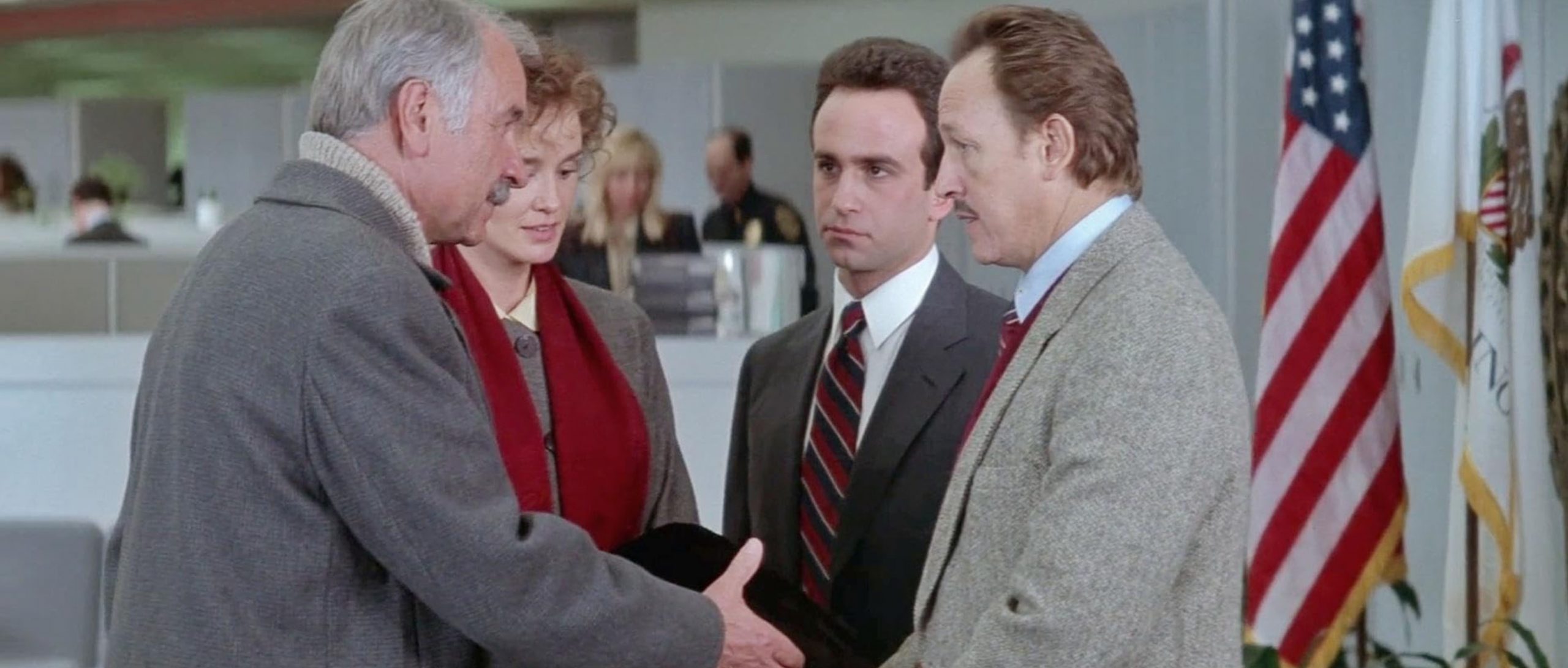
Another performance worth mentioning comes from Fredrick Forrest, who portrays Jack Burke, the man tasked with securing the conviction against Lazlo. Forrest plays the man as the complete opposite of Ann. He is not looking for someone to take the fall for these crimes; he is 100% convinced of Lazlo’s guilt. A scene early on, where he first confronts Anne and Lazlo with the charges, is chilling. When Lazlo reaches out to shake his hand, Burke refuses, staring him down. Then when Anne tells Burke, “Look, this is a mistake. You’ve got the wrong Michael J Lazlo,” he doesn’t take his eyes off of Lazlo as he responds, “Like Hell we do.” His tone is that of a convinced man… a man who is desperate to right a wrong. This performance is a perfect balance with Anne’s belief in her father’s innocence and need to protect him, making for one of the most powerful moments in the film.
One final side note: I would like to end this recommendation with another. A little while back, Eszterhas wrote an article for a publication called THE WRAP. Here, he discusses something that he actually discovered years after the release of MUSIC BOX. A discovery about his own life that was reflected in the movie, as his own father was brought up on charges of Nazi war crimes. In regards to writing the movie years before being aware of the truth in his own life, he writes, “So what made me write this story? I had a friend who was a psychologist who said that I must have seen or heard something when I was a child and that I was afraid to confront what I had seen and heard, so I wrote a film about it… in order to confront it. I don’t know the answer. I don’t know what made me write SINS OF THE FATHER (MUSIC BOX). Even the title is suspicious. It is another question that I will grapple with forever.” Check out the full article here. It will definitely be worth your time.
Watch MUSIC BOX
You May Also Like