
Starring: William Hurt, Christine Lahti, Elizabeth Perkins, Mandy Patinkin and Adam Arkin
Directed by: Randa Haines
Written by: Robert Caswell
Based on the book “A Taste of My Own Medicine” by: Ed Rosenbaum M.D.
Rated: PG13
Running Time: 2hrs 2min
NOMINEE – Chicago Film Critics Association Awards – Best Actor (William Hurt)
NOMINEE – Chicago Film Critics Association Awards – Best Actress (Elizabeth Perkins)
NOMINEE – Young Artist Awards – Best Family Motion Picture – Drama
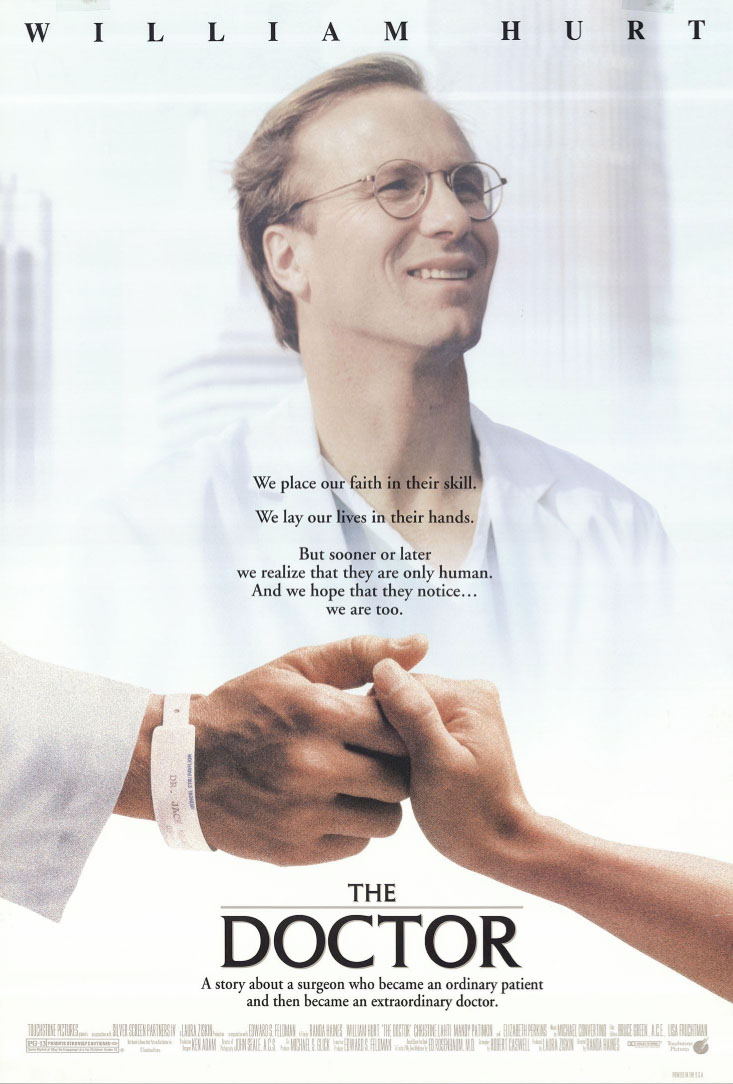
About 52 minutes into director Randa Haines’ 1991 film THE DOCTOR, an irritated heart Surgeon turned patient, Jack MacKee, confronts a nurse, suggesting, “Why don’t we, from now on, in this hospital, …drop I’m sorry from conversation, okay? Let’s just assume it begins every sentence.” This is one of the many moments from the film that resonated with me personally. Only two months before writing this review, I had my first real experience with our country’s health care system when I was admitted for open heart surgery. Though I have been meaning to write about THE DOCTOR for a while, my stressful experience with the hospital made me realize that now was the perfect time to recommend this particular film and as I rewatched it in preparation, I experienced everything through completely different eyes. The honesty with which Haines approaches the subject matter is incredibly refreshing compared to so many of the TV shows and movies that Hollywood produces about this field. The script is an intelligent exploration into themes that viewers have seen many times before, but never talks down to the audience as it presents the world in a way that, to someone who hasn’t experienced it, may seem unfair – but to those of us who have, it will only be viewed as honest and truthful.
Based on the memoirs of a real-life physician, Dr. Ed Rosenbaum, the story is a very familiar one and may, at first, seem like it’s going to be too predictable, but the emotions are presented in such a fresh manner that the whole thing feels incredibly sincere. The movie opens with Dr. Jack Mackee successfully completing a surgery on a man who has just attempted suicide. He’s a physician who keeps everyone in his life at arm’s length, scared to let them get too close. His attitude towards his patients is strictly business and he believes in keeping his emotions out of the workplace. At one point, he tells a group of interns, “There’s a danger in feeling too strongly about your patient, a danger in becoming too involved. Surgery is about judgment. To judge, you have to be detached. … A surgeon’s job is to cut. You got one shot. Go in, fix it and get out. Caring’s all about time. When you got 30 secs before a guy bleeds out, I’d rather you cut straight and care less.” Everything changes, though, when he is diagnosed with throat cancer and as the tables are turned, he must confront everything from a different viewpoint – that of the patient.
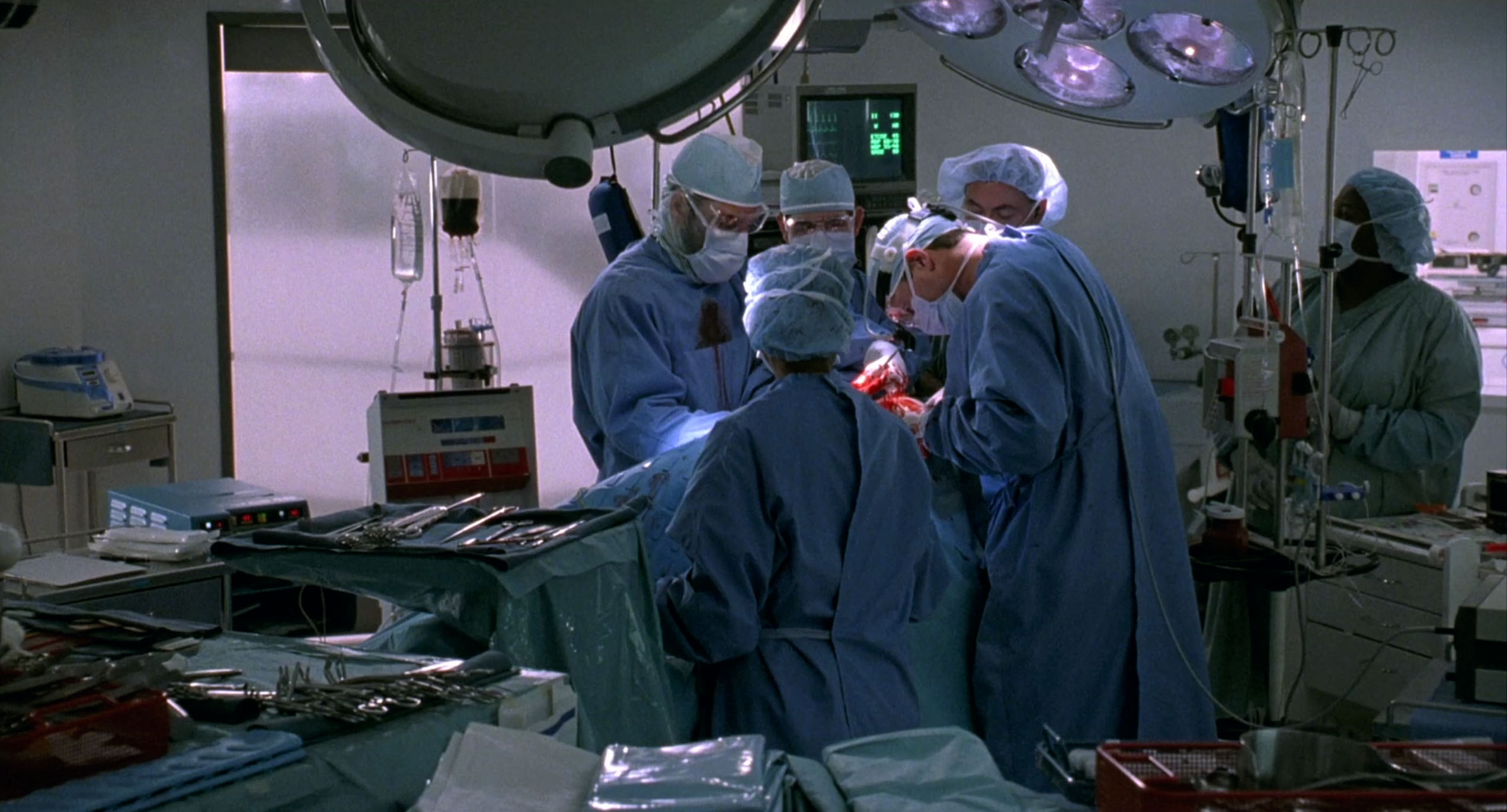
The script is all about Dr.Mackee’s discovery of his humanity. The plot offers nothing new in terms of ideas regarding a man whose situation is turned around and who finds himself on the other side of a situation. It’s an old idea that has been explored many times in books, TV shows and movies alike. As a matter of fact, Mike Nichols’ REGARDING HENRY, which stars Harrison Ford and Annette Bening and features a similar thematic exploration, came out only a month earlier. Unlike REGARDING HENRY and so many other similar films, though, where supporting characters are overly sympathetic, dialogue is overly direct and the character arc is blatantly obvious—aimed at manipulating the audience’s thoughts and feelings towards those the filmmaker wants them to feel—director Haines adopts a more subtle approach, making everything less obvious and more restrained. She allows the audience the opportunity to feel the emotions that are true to who they are as individuals, bringing their own emotions to the film. All the characters act and interact like real people and the moviegoer will recognize them as genuine. The situation unfolds rather than letting the dialogue tell us everything, in fear that we won’t understand and the viewer is treated with intelligence and given the opportunity to involve themselves emotionally in the characters’ journeys while maybe looking within themselves to examine their own relationships with the people in their lives.
Haines also recognizes the medical industry for what it is. How many times have we, as moviegoers, been given stories about doctors as heroes who are always looking out for their patients in both caring and emotionally supportive ways? Then, how many times have we, as patients, experienced this in the hospital or doctor’s office ourselves? I know that my own experience with my hospital stay was mostly cold and unwelcoming and that is exactly what is portrayed here. When Dr. MacKee sees his throat doctor for the first time, she is, like him, all business. Never reassuring, only straightforward and cold. The same thing with the nurses and orderlies. They almost come off as too scared to get to know their patients because that could make things incredibly hard if they are forced to make a tough decision or something goes wrong, which is often the case in hospitals. Don’t get me wrong, there were three people during my own hospital stay, two nurses and a surgeon, who were great and they are represented here through a surgeon, Dr. Eli “The Rabbi” Bloomfield, who believes in talking to his patients and walking them through everything he is going to do. Unfortunately, the other doctors don’t understand and sometimes even mock his approach.
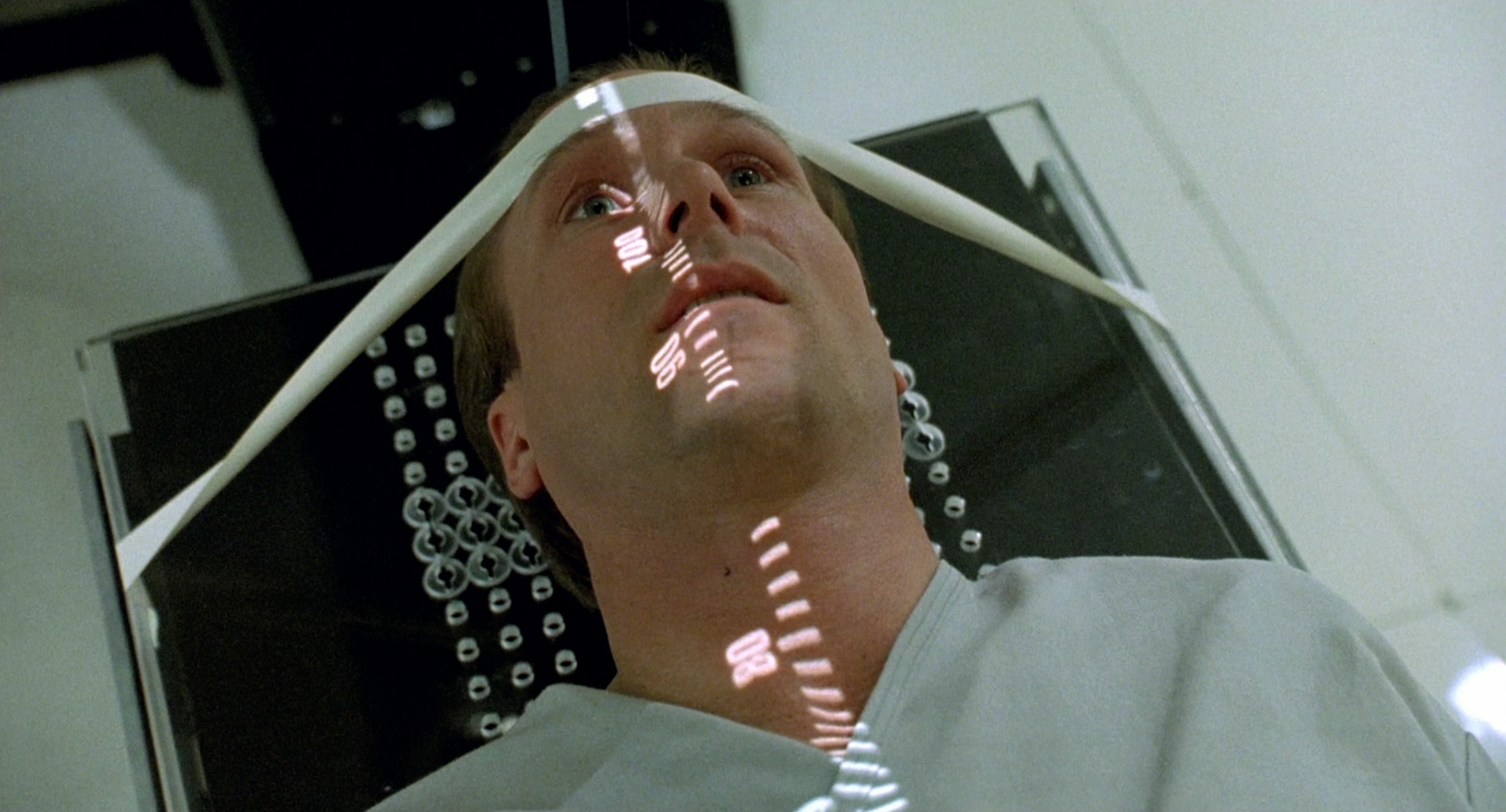
William Hurt’s performance as Dr. MacKee is the key to the film’s emotional success. He effectively portrays the doctor as a selfish man who doesn’t recognize that his behavior towards others is wrong. Dr. Mackee is a man who makes jokes in uncomfortable moments and doesn’t realize that the other person in the room may not find it funny. One of my favorite scenes is one in which he examines a woman whose procedure is over and has to have the staples holding her healed wound together removed. She asks him an uncomfortable question about the scar fading, as she is concerned that her husband may no longer find her attractive. Instead of sitting her down and being understanding, as other movies might have him do, he says, “Tell your husband you look like a model and you have the staple marks to prove it.” He thinks he is easing the moment, because for him he is, but he is also completely blind to the fact that he just made the patient feel worse. It’s Hurt’s honest and more subtle approach that makes THE DOCTOR so effective. Every emotional beat feels genuine and earned. Though there is some dialogue that is used in an expositional way, the viewer is given more emotional information by the way Hurt portrays Mackee’s relationships with others, while also conveying his many changing emotions from his cold disposition to his anger and frustration to the feelings of understanding as he begins to realise the reality of a patient’s feelings.
On the supporting side of things, Christine Lahti, one of Hollywood’s most underrated actresses (check out my recommendation for another underexposed treasure that she shines in, RUNNING ON EMPTY), portrays Dr. Mackee’s wife, Anne. She once again delivers a strong performance as she plays a woman who obviously loves her husband yet struggles to understand him. But it’s Elizabeth Perkins who adds the emotional depth to Dr. Mackee’s journey. She plays June, a patient who was screwed over by the system and may die because of it. Her relationship with Dr. Mackee is the catalyst that forces him to look deep inside his own soul and discover who he really is. June has a calm demeanor, knows her fate and almost seems to have accepted it. At times, she confronts Dr. McKee with the many truths which he cannot deny, forcing him to realize that he’s not the only problem, but that certain choices made at the hospital and by the insurance companies just aren’t fair. Perkins does a great job of expressing June’s worries and anxieties, making this relationship, which refreshingly doesn’t force a romantic angle, incredibly emotional.
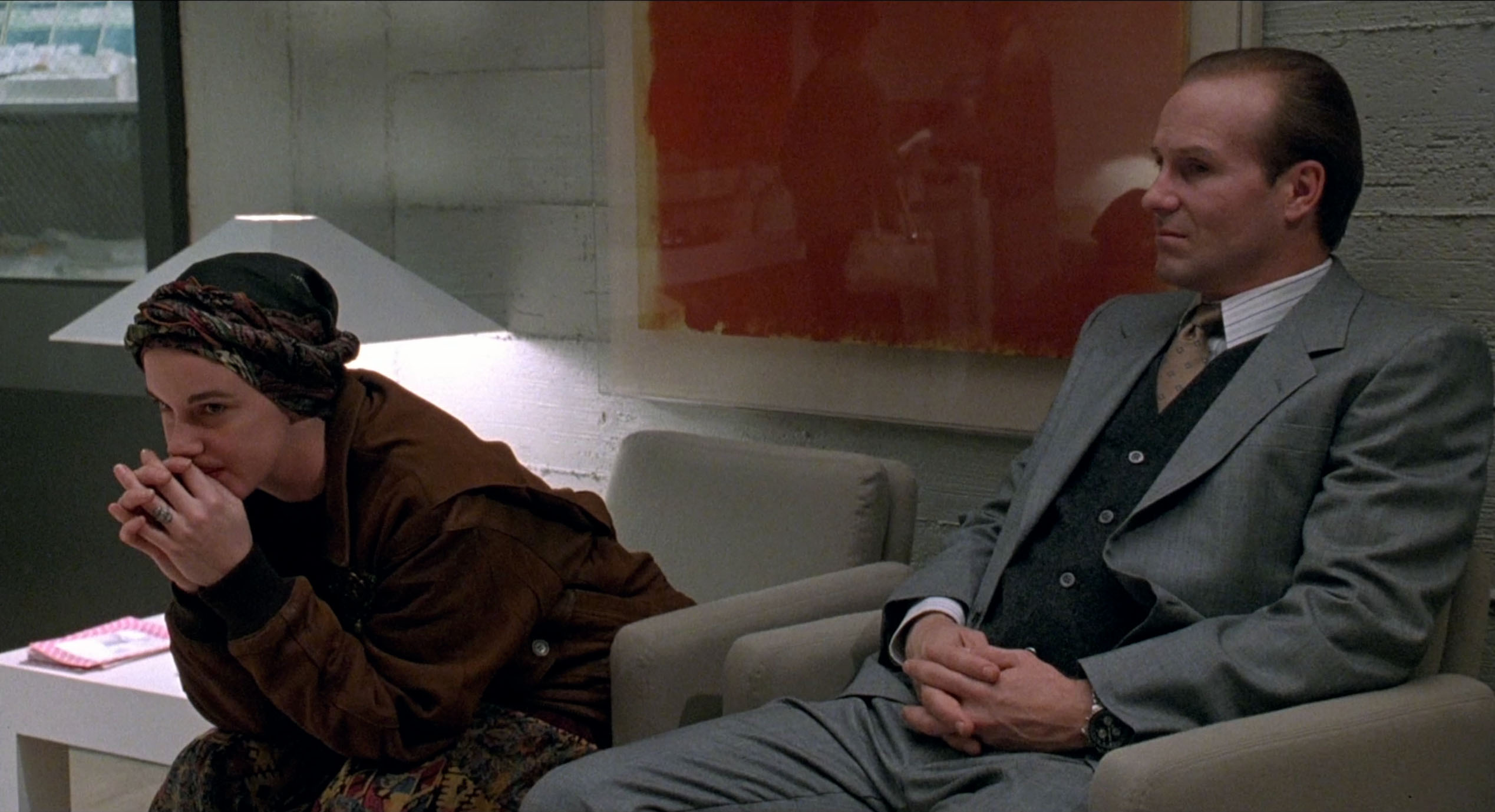
I can’t close out this recommendation without also mentioning the small role of Dr. Eli “The Rabbi” Bloomfield, played by Adam Arkin. This is a role that takes up very little screen time and, at first, feels like a throwaway part. Yet, because of the caring way in which Arkin approaches the character and the depth he gives him as a person, Bloomfield becomes one of the most meaningful characters in the movie. He’s the only doctor who seems to care about his patients, even going as far as to talk to them while operating, insisting they can hear and understand him, even though they are out cold. This is a great contrast to the rest of the hospital staff, balancing things out by giving the viewer an example of the good, caring doctors in the world and leading to a small but interesting scene towards the end of the film when Mackee must ask Dr. Bloomfield for a favor.
Director Randa Haines came to the movie-going audience’s attention when she made the fantastic 1986 film CHILDREN OF A LESSER GOD, in which actress Marlee Matlin received an Oscar for best actress. Since then, she has made very little. But, with a body of work that consists of CHILDREN OF A LESSER GOD, THE DOCTOR and another film which deserves more attention, and maybe even a future review on this site, WRESTLING EARNEST HEMINGWAY, I can only wonder why we haven’t seen a lot more from her. I can only hope that one day she finds her way back to the world of filmmaking and we can get at least one more great movie from this fantastic filmmaker. I’m keeping my fingers crossed.
Watch THE DOCTOR
You May Also Like