
Starring: Susan Sarandon, Sean Penn and Robert Prosky
Directed by: Tim Robbins
Written by: Tim Robbins
Based on the Memoir by Sister Helen Prejean
Rated: R
Running Time: 2hrs 2mins
WINNER – Academy Award – Best Actress in a Leading Role (Susan Sarandon)
NOMINEE – Academy Award – Best Actor in a Leading Role (Sean Penn)
NOMINEE – Academy Award – Best Director (Tim Robbins)
NOMINEE – Academy Award – Best Music, Original Song “Dead Man Walking (Bruce Springsteen)
“The death penalty is the state-sanctioned punishment of executing an individual for a specific crime. Congress, as well as any state legislature, may prescribe the death penalty, also known as capital punishment, for crimes considered capital offenses. The Supreme Court has ruled that the death penalty does not violate the Eighth Amendment’s ban on cruel and unusual punishment, but the Eighth Amendment does shape certain procedural aspects regarding when a jury may use the death penalty and how it must be carried out.” – Cornell Law School
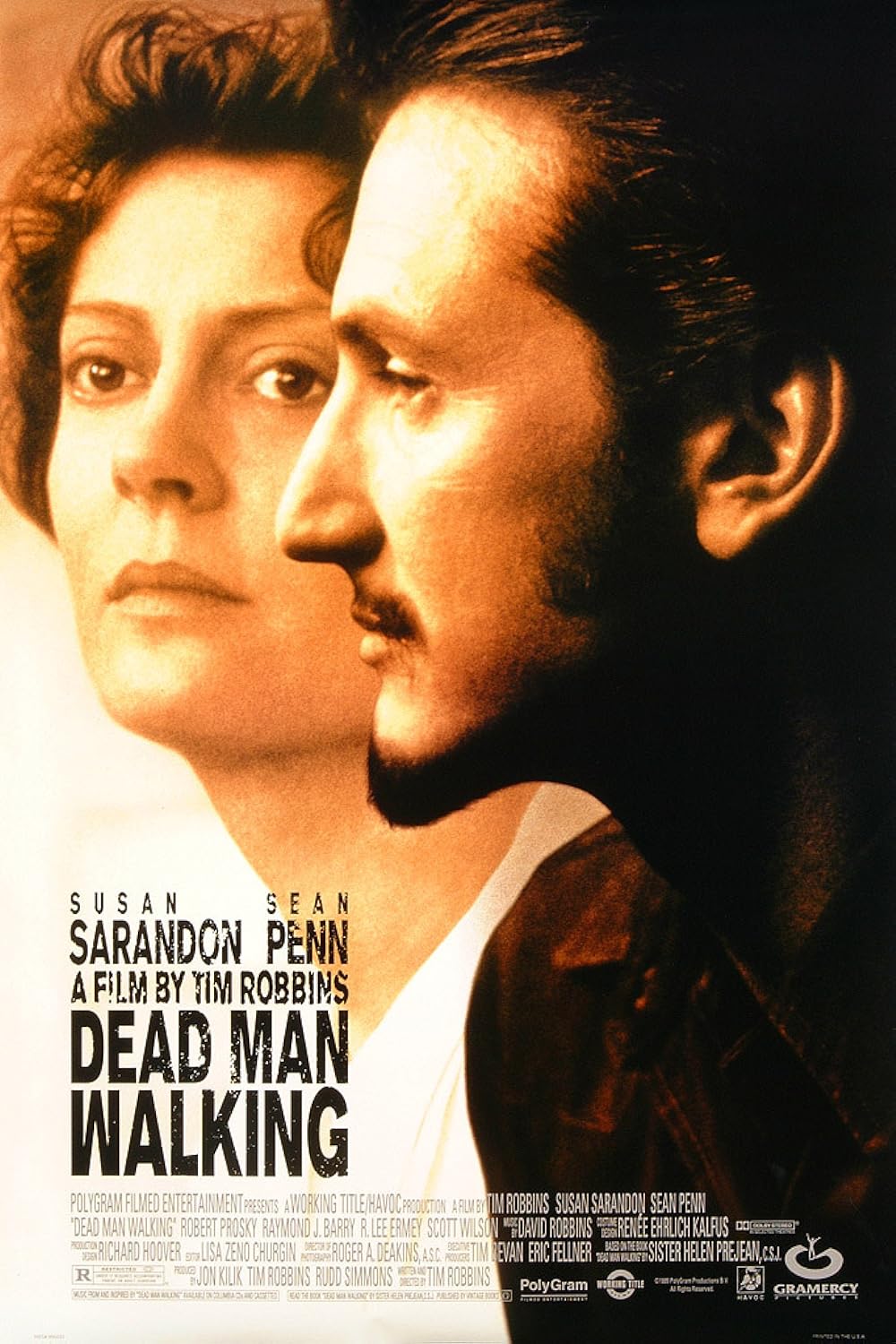
When it comes to delivering a movie that centers its themes around an often-debated and extremely controversial subject like Capital Punishment, viewers might expect the filmmaker to pick a single side to represent and argue. After all, isn’t this what Hollywood films do? DEAD MAN WALKING takes a different approach. It’s more than just a Hollywood movie looking for an Oscar. Is it entertaining? Yes. Is it powerful with its emotions? Without a doubt. But more than that, while telling a strong story with great filmmaking and heartfelt characters, it tackles this tough, controversial theme better than most because it offers an honest approach to both the complicated legal and personal sides of the death penalty. Tim Robbins, whom most will be more familiar with as an actor, wrote and directed an emotional movie based on the memoirs of Sister Helen Prejean that refuses to offer up any easy answers, as it remains balanced in its exploration of the issue, examining it from every angle possible. It doesn’t take sides and trusts the audience’s intelligence while encouraging us to consider differing opinions in order to form our own. It’s a film that refuses to preach a side, but instead wants to spark conversation and debate among viewers long after the credits roll.
The story centers itself on the relationship between Sister Prejean and a death row inmate, Matthew Poncelet. Poncelet is a man who has been found guilty of the rape and murder of a teenage girl, Hope, as well as the murder of her boyfriend, Walter. It’s a tragic story of anguish and sorrow. Sister Prejean is asked to become Poncelet’s spiritual advisor after a date is set for his execution and as their bond develops, the situation becomes incredibly complicated and ultimately tests the Sister’s faith in many ways. It’s a story that fearlessly explores the emotions of its characters and the truths it chooses to reveal about the death penalty itself. The script’s strength lies in the fact that it isn’t only about how this horrible act that Poncelet has been found guilty of has affected him and ultimately Sister Prejean. Robbins understands that the situation is a lot more complex than that, as he also chooses to give time to examining the impact on so many others, including the victims’ parents and Poncelet’s own family.
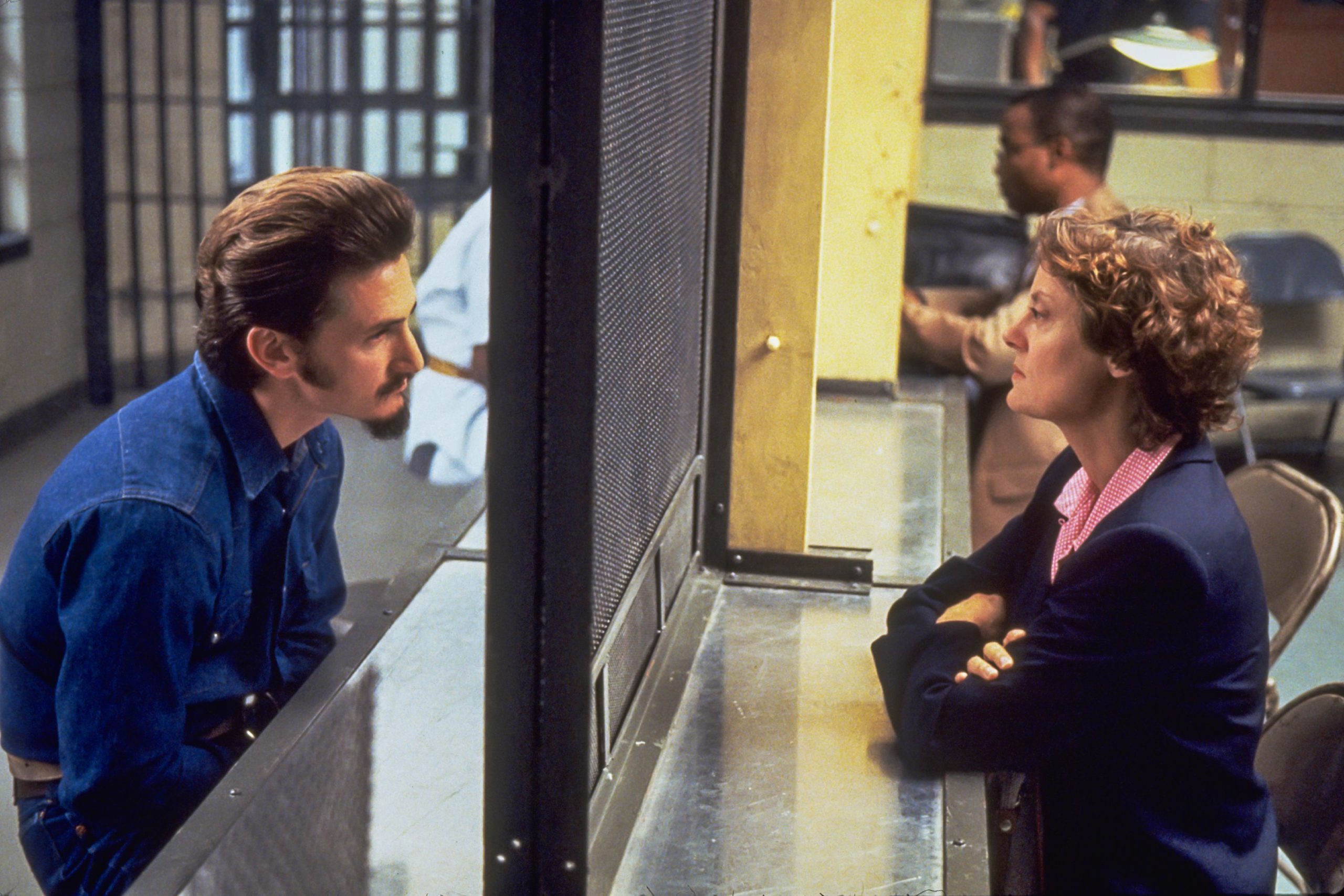
Sister Prejean is a confused woman who has gotten in way over her head and, determined to save the soul of this misguided and terribly troubled man, she must reach deep within her own spirituality. At one point, she tells the parents of the female victim, “I’m just trying to follow the example of Jesus. He said that every person is worth more than their worst act.” Sarandon’s ability to effectively embody the soul of this woman, who must wrestle with every belief she has to find compassion for Poncelet, while letting the viewer feel and relate to her every emotion, is nothing short of incredible and every bit worthy of the Oscar she received. This is a tough journey for the sister to take as she slowly peels away the layers of this complex man to get to his true inner self and Sarandon does an amazing job in portraying her frustration, disappointment, confusion and ultimate empathy as she makes her way along the path to helping him find salvation.
As for the inmate Matthew Poncelet… he is handled in a very delicate manner. His character is genuinely complex in the way he is both written and performed. He’s not the typical innocent man who is thrown into prison with the need of being saved kind of character which Hollywood filmmakers like to base their movies around. He’s a bad man who did some terrible things and the film never shies away from this. Poncelet fights to convince people he was only there as a witness, but even if that were true, the viewer still must ask, “Why didn’t he do anything to stop his friend from doing the horrible things that were done?” Then, although we don’t learn the truth of his involvement until the end of the film (I’m not saying whether he did it or not, but as the viewer watches, they will continuously question it until the truth is revealed), Robbins wastes no time in portraying Poncelet as a bad person in many other ways. At one point, he talks about respecting Hitler and believing in the survival of the Aryan race. He tells a news reporter, “Hitler was a leader. I admired him for getting things done… Hitler might have gone overboard with the killing and stuff, but he was on the right track that the Aryan was the master race.” Then in another piece of news footage, he’s seen mocking the motion of slitting his own throat while in the courtroom. Sister Prejean, at one point, tells him, “You are making it so easy for them to kill you, coming off as some kind of crazed animal, nazi, racist, mad dog, who deserves to die.” This is a man who needs to accept responsibility for his actions. Through it all, Penn portrays Poncelet as a real person. He never plays him as a victim, nor does he try to make the audience feel bad for him in any way. He is someone who may try to play the tough guy but is still filled with genuine emotion and, even in the end, a childlike fear. As bad as he is, he still genuinely loves his family and eventually begins to feel real regret and sorrow for his sins. This is a hard guy to understand, yet Penn gives him just enough humanity to keep him feeling like a real person, not just an evil caricature, ultimately making it harder for us, the viewers, to see the answer to his fate as simply as it may have seemed as we started watching the film.
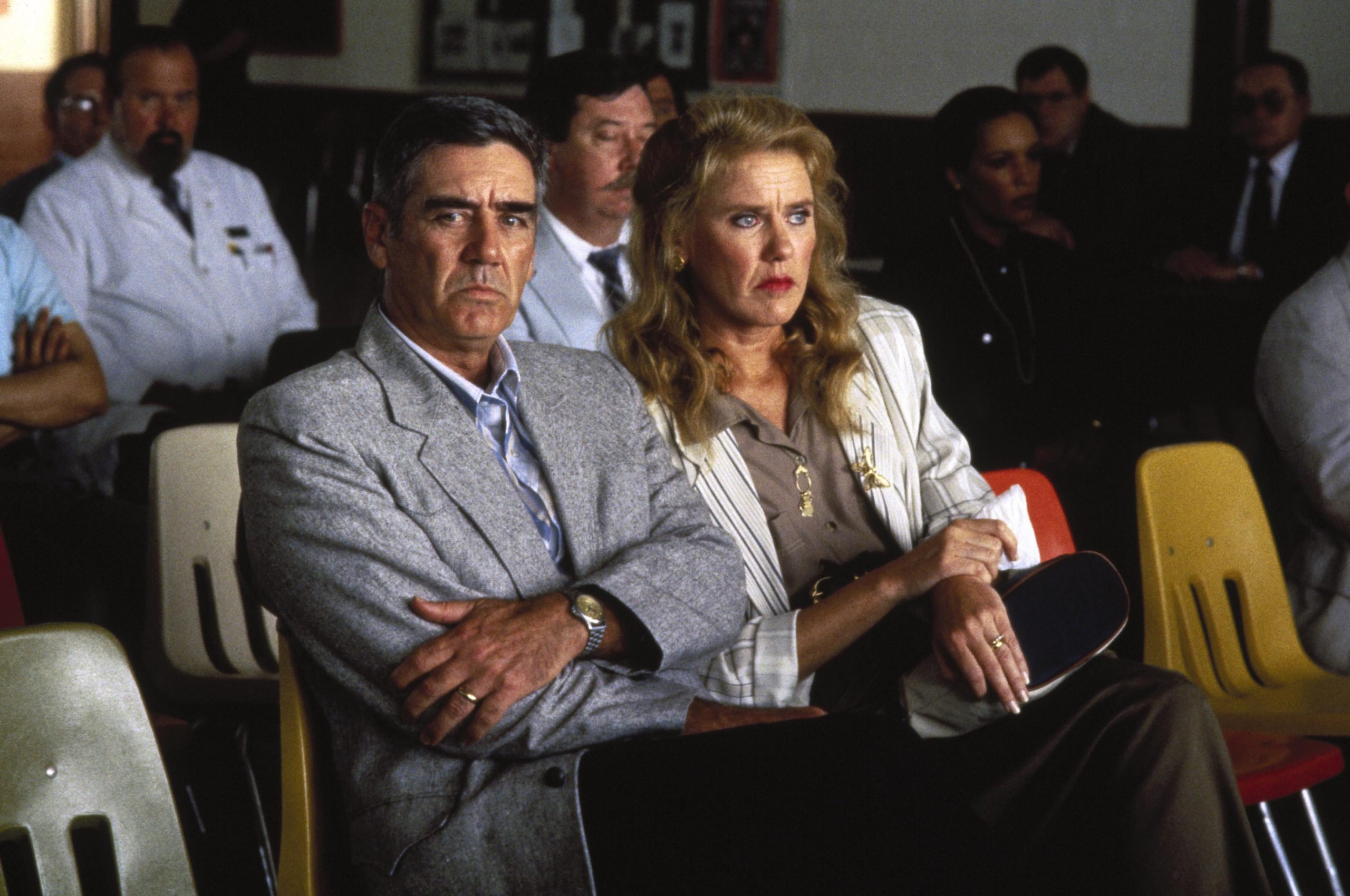
Yet this isn’t a movie about two people. It’s stronger because it recognizes the devastating effects the situation has on the families of both victims and takes the time to also examine their feelings with real depth and honesty. First, you have Walter’s father, played with a much-needed subtlety by Raymond J. Barry, whose marriage has been destroyed as he and his wife no longer know how to communicate after the loss of their son. Then there are Hope’s parents, played with heartbreaking emotion by R. Lee Ermey and Celia Weston. Dealing with the rape and loss of their daughter has filled them with a terrible amount of anger and hatred. One of the film’s strongest scenes comes when Sister Prejean visits their house. They think she’s come to see them because she’s changed her mind about Poncelet, but when she reveals that she has decided to be his spiritual advisor, their disappointment and anger becomes so real and the two performers deliver some genuinely heartbreaking emotions that really allow the viewer the chance to see that the only way that they will ever feel at peace will be to see Poncelet put to death as a form of justice for their daughter.
Then there’s another, as we also get an examination of Poncelet’s family and how what he has done has ruined their lives too. His mom, portrayed by Roberta Maxwell, believes her son when he says that he was only there but didn’t do anything and is devastated by the thought of losing him to the execution chamber. There is no silver lining for anyone in a situation like this, and DEAD MAN WALKING’s refusal to offer the hint of one is probably its biggest strength, but also what makes it so hard to watch at times.
Ultimately the whole film can be summed up by something the prison chaplain tells Sister Prejean right before she meets Poselet for the first time. He says, “There is no romance here, Sister. No Jimmy Cagney, “I’ve been wrongfully accused, if I only had someone who believed in me nonsense.”” This film tells its story in the most genuine way possible. Its strength lies in its truth and its ability to show both sides so effectively that it will hopefully create a much-needed conversation about capital punishment among those who see it. This isn’t a movie you just watch. It’s a movie you experience.
Watch DEAD MAN WALKING
You May Also Like