
Starring: Al Pacino, Gene Hackman and Ann Wedgeworth
Directed by: Jerry Schatzberg
Written by: Garry Michael White
Rated: R
Running Time: 1hr 55mins
WINNER – Cannes Film Festival – Palme d’Or
“Gene Hackman: Before the film started, Pacino and I were up in San Francisco, and we thought maybe we would try to get into the characters, you know, “The Bums” and we got some clothes and stuff and walked around Market Street… …and then we get in a cab and we go back to, you know, the “Mark Hopkins.”
David Leterman: Yeah, Sure. It’s easy to be a bum that way, when you have the suite reserved at the “Mark Hopkins.”
Gene Hackman: But that was fun… One day we were walking along there and this guy… I said to Al maybe we can go to the Salvation Army and see if there’s a soup kitchen or something… I asked the guy where it was and he looked at us and he said, “Yeah, it’s down a couple of blocks and you go over this way….” and I said, “Thank you.” And he said,” You’re welcome, Mr. Hackman. Mr. Pacino…” So, we walked away and I turned around and looked at the guy and he’s kind of talking to himself… …I often wonder what he thought. You know, he had seen Al, you know, in THE GODFATHER like three months before that and I was getting the Academy Award just prior to that… He must’ve thought that show business is really fleeting… doesn’t last long.” Gene Hackman Interview on “Late Night with David Letterman
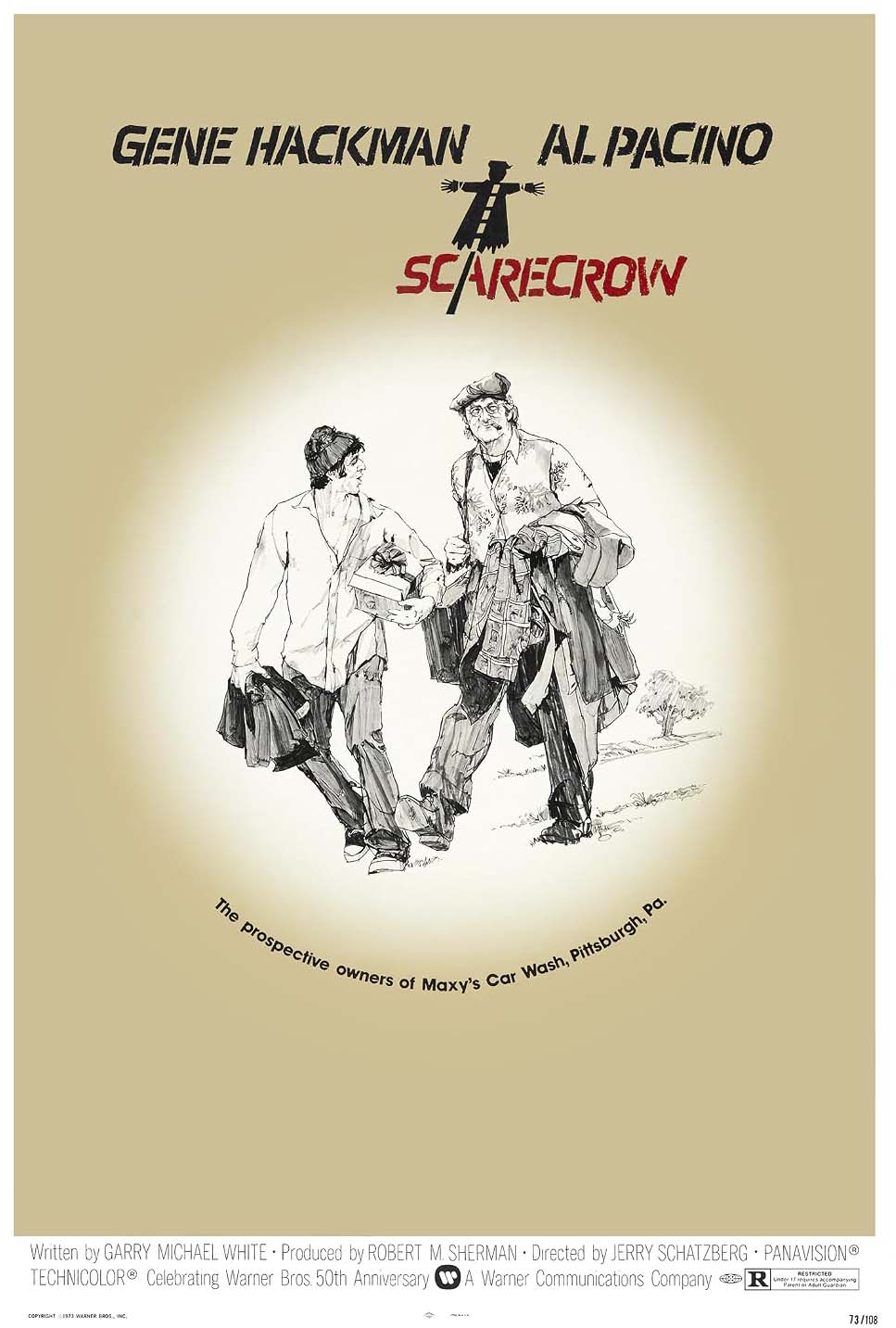
With everything the 1973 film SCARECROW has going for it, you’d figure that it would have done relatively well at the box office or, at the very least, been discovered by more people on home video over the years. At the time of the film’s release, director Jerry Schatzberg was a celebrated photographer whose photos appeared in magazines such as “Vogue,” “Esquire,” and “Glamour.” A couple of years earlier, he was also responsible for introducing the moviegoing audience to a young, unknown Al Pacino when he cast him in the critically acclaimed feature film PANIC IN NEEDLE PARK. Then in 1972, Pacino made himself a household name with his second film, the critically acclaimed and award-winning THE GODFATHER, where he delivered a breakout performance as Michael Corleone, while his co-star, actor Gene Hackman, had just won the Academy Award for his performance of Popeye Doyle in the equally acclaimed and also award-winning THE FRENCH CONNECTION. If that weren’t enough to attract moviegoers to the theater, the film itself would also go on to win the Palme d’Or at the prestigious Cannes Film Festival (tied with THE HIRELING, directed by Alan Bridges and starring Robert Shaw). But wait, there’s more – popular talk show host David Letterman would tell his late-night audience that it was one of his all-time favorite films and Hackman himself was known for saying it was probably his favorite film to work on (Click Here). It’s a movie that fits in perfectly with the tone of so many other much more beloved films of its time and should rightfully be a part of any conversation that includes movies like MIDNIGHT COWBOY, THE LAST DETAIL, EASY RIDER and FIVE EASY PIECES. On top of all this, it’s a simple story that boasts an insightful, sometimes humorous and sometimes tragic script that refuses to bow to Hollywood standards, keeping its characters and themes as true to real life as possible, making the characters’ inner journeys easy to relate to. Yet, with all this, it still remains unfamiliar to most of today’s movie-watching audience.
The movie opens as a man named Max walks across a large, empty field. Where he is coming from is never mentioned, but it’s reasonable to assume he’s walking away from the prison from which he was recently released. He immediately comes to a deserted back road, where he hopes to hitch a ride to his final destination in Pittsburgh. Already on the roadside is Lion (short for Lionel), who’s also looking for a ride, except that his destination is Detroit. Five years earlier, Lion ran away from his responsibilities and has just returned from spending time at sea. After the two men meet, their differing personalities become evident when Lion tries to communicate with Max, only to be ignored.
At its core, SCARECROW is a straightforward road movie focusing on the lives of two very different men and their growing friendship. Max is a loner who finds it hard to trust others and is quick to approach any opposition with his fists. Meanwhile, Lion is a man who looks at life with a sense of humor and spends his time trying to make people laugh. Of course, since this is a movie, the viewer can easily guess what’s about to occur and after Lion offers Max his final match to light a cigar – something Max seems to do quite often throughout their travels – the ice is broken and the two find themselves traveling together only to eventually form a partnership when Max asks Lion if he would like to become partners in a carwash business in Pittsburgh.
Throughout his career as a director, with films such as HONEYSUCKLE ROSE and PANIC IN NEEDLE PARK, Schatzberg has always maintained a realistic tone in his films, focusing on authentic human emotions, while presenting stories that feel true to life. Alongside writer Garry Michael White, SCARECROW focuses more on the people and their internal struggles than on the need for any actual plot. In fact, the carwash, which is the only hint of a standard plot device that the film has to offer, feels like nothing more than a seed planted to set the characters on their real journey of self-discovery. This is a story about real people with real expectations. Their emotions never feel like those of so many of the cookie-cutter characters presented in most modern blockbusters. They are the kind of people the viewer will easily identify with, both in themselves and in those around them. Max’s dream is to run a small carwash, as he and Lion both strive to start their lives over. Their dreams of success are simple, as their real struggle is finding the balance that will help them feel whole inside.
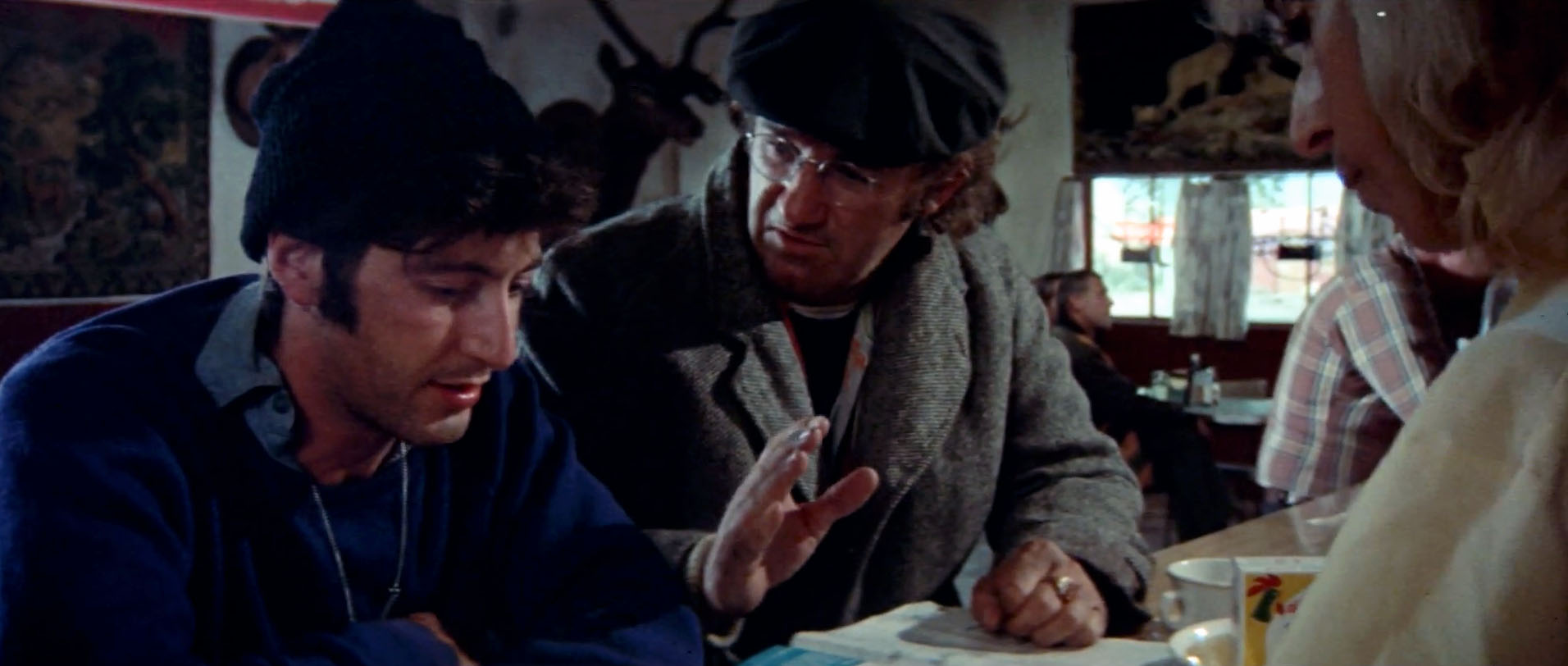
Schatzberg’s use of cinematographer Vilmos Zsigmond’s images helps to create a realistic tone that suggests the camera is there only as an outside observer and the laid-back editing style allows the shots to linger on the actors, sometimes refusing to cut to different angles which would break the momentum of the performances. Towards the beginning of the film, the viewer is given a seven-minute scene where the camera sits at the end of a counter and never shifts, except to reposition itself when a character moves. In the full 7-minute scene, there is only one cut to a close-up of Lion, which almost immediately returns back to the original two-shot that makes up the rest of the scene. The camera just sits there, allowing us to eavesdrop on Max and Lion as they have their first real conversation. Schatzberg’s trust in Hackman and Pacino as actors who are clearly improvising much of what they discuss, combined with the stationary camera, lends a realism to the moment, while allowing the dialogue and emotions to feel incredibly genuine as the two characters begin to bond on a real level for the first time.
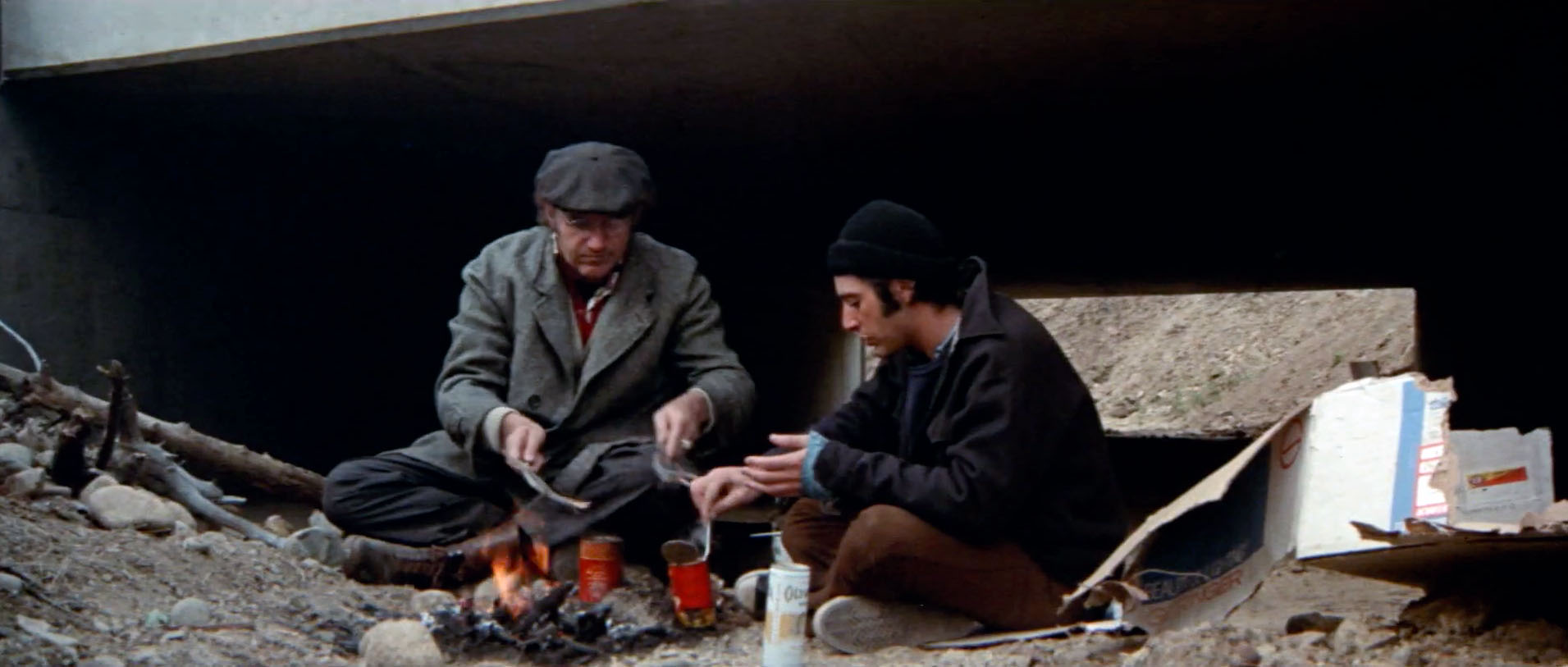
The film’s title, SCARECROW, comes from one of my favorite scenes early on, where Lion tells Max a story that illustrates what he believes the true meaning of a scarecrow in a farmer’s field is. Most people have been taught that the scarecrow is designed to sit in the middle of a field of crops, as an ugly prop used to scare away the crows. Lion believes in a different interpretation. He describes it as something whose intent is completely the opposite, telling Max, “The farmer puts out a scarecrow, right? With a funny hat on… got a funny face… crows fly by. They see that… strikes them funny… makes them laugh… Then they say, “Wow, that old farmer Jones down there, he’s a pretty good guy. He made us laugh, so we won’t bother him anymore.” What at first seems like an unimportant story told by a character is revealed to be an interesting parallel to Max and Lion’s personalities, as each resembles one of the scarecrow’s two sides. Max is the gruff, mean, scary side that everyone should be frightened of. At one point, he confesses, “I’m, like, about the meanest son of a bitch alive,.. I don’t trust anybody. I don’t love anybody. And I can tear the ass out of a God Damn elephant too.” He puts on a strong, serious demeanor and believes in dealing with confrontation in a “stand your ground” kind of way that often finds him physically fighting with others he encounters. Meanwhile, Lion is the complete opposite. He is childlike in tone, always looking for the humorous side of any situation, making the daring yet more realistic turn that the final act of the story takes all the more tragic. Like the scarecrow in his story, he believes that if you make others laugh, you can get through any situation without any consequences, only to learn that this may not always be true.
Ultimately, this is an actor’s movie, and its success depends on how the viewer feels about each character and how involved they become in their ongoing emotions. Individually, both Hackman and Pacino shine, giving some of the best performances of their careers as the heart of the film sits on their shoulders. As much as Hackman adds a gritty, tough-guy attitude to Max, Pacino effectively creates a childlike innocence in Lion. Ultimately, though, it’s the chemistry between Max and Lion that pulls the whole story together. These are two very different men, each in need of finding a little piece of the other within themselves to complete who they are as human beings. As their friendship grows, a real bond can be felt between the two, one based on genuine trust. The fact that, because of differing acting techniques, Pacino and Hackman didn’t get along on set makes the acting all the more accomplished, as the lack of any kind of bond between the actors is completely hidden from the viewer as both Max and Lion develop a genuine relationship that grows out of mutual respect while morphing into an unbreakable bond.
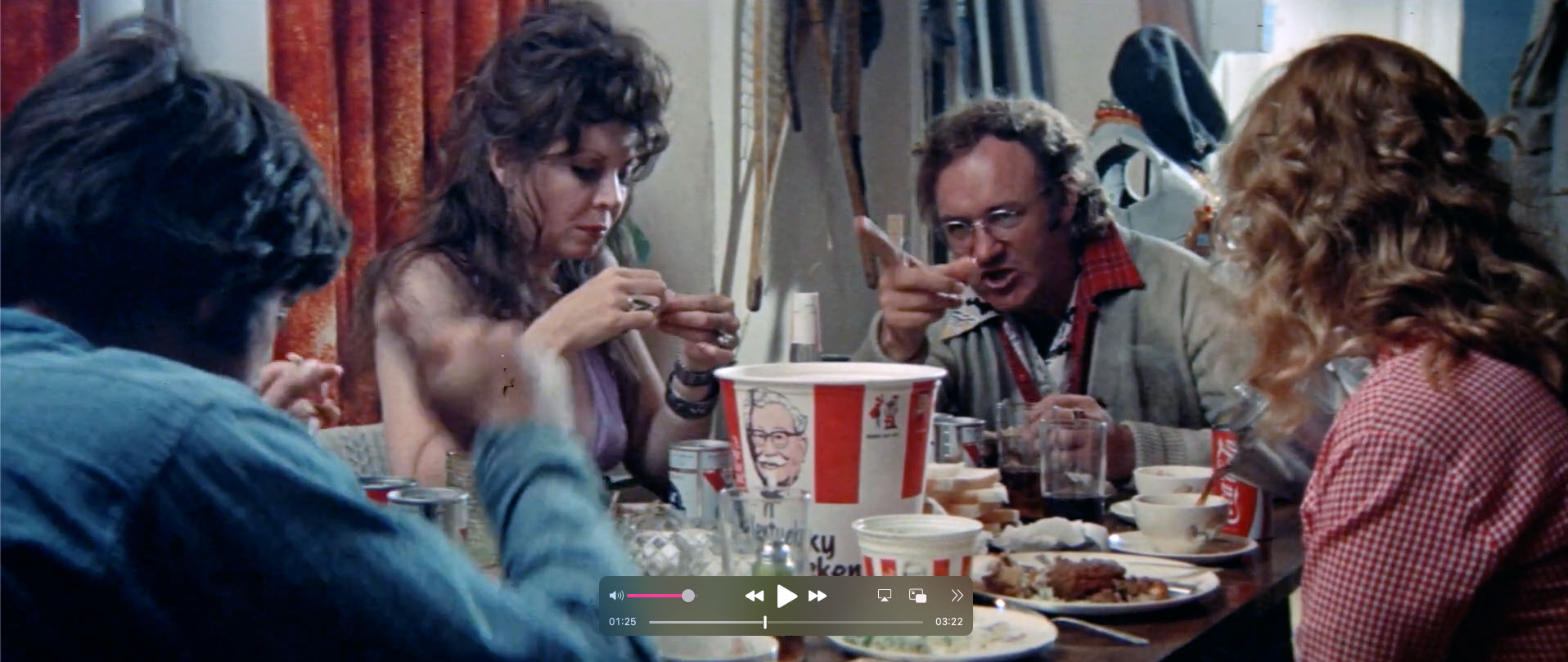
Character actor Richard Lynch gives a career-best performance as a man who befriends Lion during a brief stint that the two leads spend in a correctional facility. He delivers an incredibly sleazy performance that comes off as friendly at first, only to turn purely evil when his true colors are revealed. Then there’s Dorothy Tristan, who perfectly downplays Max’s sister Coley as a kind, caring woman who truly loves her brother and wants only what’s best for him. It’s Ann Wedgeworth, though, who is the true standout. She plays Max’s intended girlfriend, Frenchy, who, at first, comes off as kind of a floozy. She falls for Max’s charms almost immediately, catering to his every whim. Even her name, Frenchy, makes her feel like someone who isn’t meant to be taken seriously. As the story moves forward, though, Wedgeworth subtly reveals some real depth in Frenchy’s personality, allowing her to evolve into someone of great importance as she becomes the person who introduces Max to a side of himself that he probably never saw before, somebody with a chance to maybe settle down with a woman rather than living a life of one-night stands.
Ultimately, SCARECROW is a film that is hardly mentioned when the conversation turns to either Hackman or Pacino’s careers. The fact of the matter is that they both deliver incredible performances that should stand alongside some of their best work, making it a perfect addition to the world of Underexposed Cinematic Treasures.
Watch SCARECROW
You May Also Like